

Universal Credit is not paid the week you claim it. It is not paid the fortnight you claim it. The structure of the benefit means the first payment lands roughly five weeks after you start, and that gap has pushed a great many households into debt they did not need to take on.
The system has an answer to it, and a second deadline that quietly ends claims before they begin. Both are worth knowing before you open the form.
Checkpoints
- You must submit the claim within 28 days of creating the account
- First payment lands about five weeks after you claim
- An advance exists precisely for that gap, and it is repayable
- A Migration Notice has a deadline; miss it and transitional protection goes
1 Check eligibility, then beware the 28-day trap
The eligibility rules: you live in the UK, you are eighteen or over (with some exceptions at sixteen and seventeen), you are under State Pension age, and your savings sit below the capital limit. You can be in work, out of work, or self-employed.
Now the part that costs people money. Creating your online account does not start your claim. You must submit it, and you have twenty-eight days from creating the account to do so. Miss that and you start again from scratch — and your claim date, which determines when payments begin, moves with you.
Have the material ready before you open the account: bank details, National Insurance number, your rent or mortgage details, earnings, and childcare costs. Couples create two accounts and link them.
2 Understand the wait — it is arithmetic, not a backlog
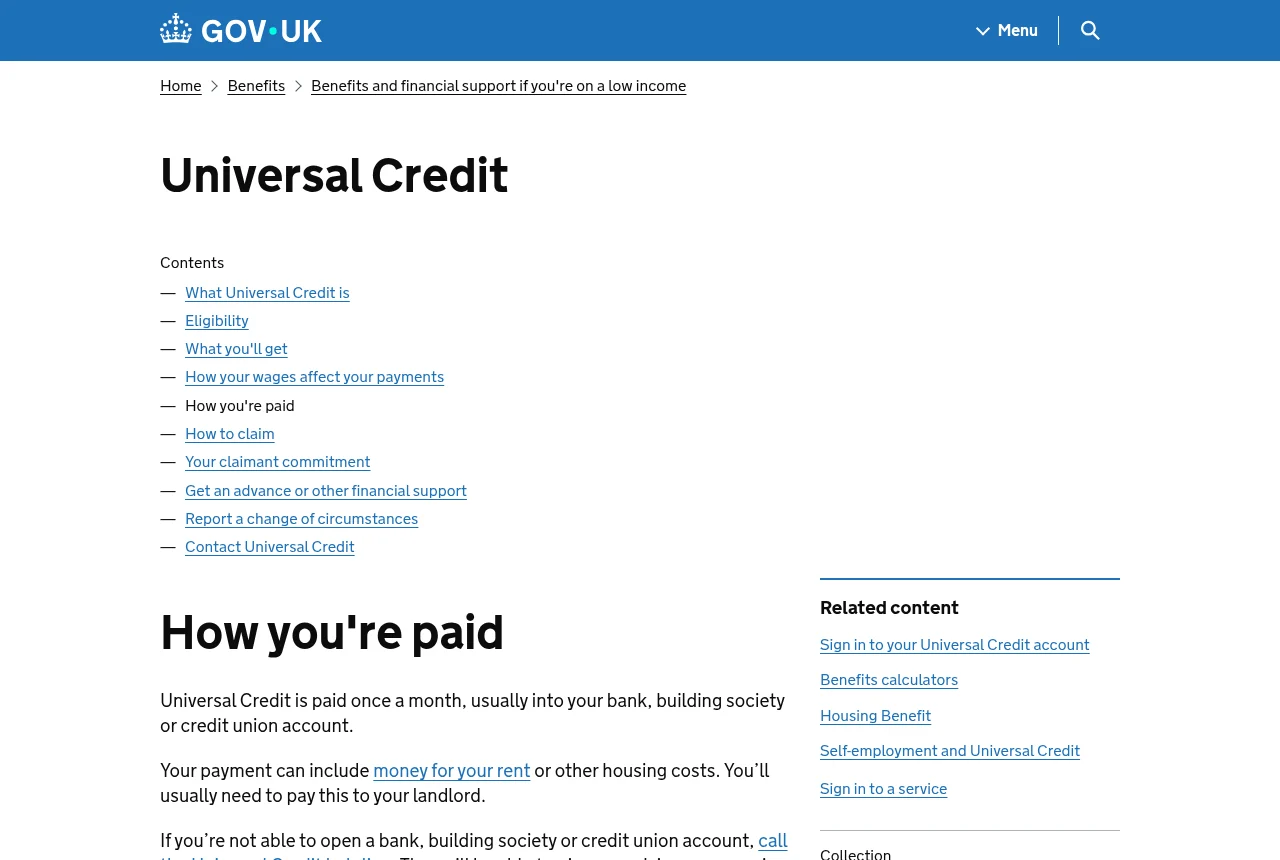
Universal Credit works on an assessment period of one calendar month, starting on the day you claim. Your entitlement is calculated from what happened during that month. The payment then arrives seven days after the period ends.
One month plus seven days is why the official guidance says the first payment usually comes around five weeks after claiming. It is not a queue you can jump, and phoning does not shorten it.
This also explains a rhythm that confuses people later: because the assessment period is anchored to your claim date, a month with two paydays in it can look like a month of high earnings and cut that month’s payment. The following month corrects.
3 Take the advance, and report changes the day they happen
If you cannot survive five weeks, ask for an advance on your first payment through your journal, your work coach, or the helpline. It is not a grant: it is normally repaid out of future payments over up to twenty-four months, and repayment can be deferred for a period.
Then, for as long as you claim, report changes through your account as they happen — a job, a new child, a partner moving in, a house move, a change in rent, savings or health.
Late reporting does not save you money. An overpayment is recovered from you afterwards, out of payments you have already spent.
4 Common mistakes, and how to avoid them
Mistake 1
Creating the account and not submitting within 28 days, which resets everything.
Mistake 2
Enduring the five-week wait on credit cards without asking for an advance.
Mistake 3
Ignoring a Migration Notice, which stops legacy benefits whether or not you claim.
Do this today
Gather your bank details, National Insurance number, rent and earnings figures before you create the account. Then create it and submit the same week.
FAQ Frequently asked questions
How long until my first payment?
The assessment period is one calendar month from your claim date, and payment follows seven days after it ends — usually around five weeks in total.
What if I cannot manage during the wait?
Apply for an advance on your first payment through your online journal, your work coach or the helpline. It is repaid from later payments, normally within twenty-four months, and repayment can be delayed for a period.
Can I still claim Tax Credits instead?
No. Tax Credits ended on 5 April 2025 and no new claims are possible. Depending on your age and circumstances, Universal Credit or Pension Credit is the route.
Key takeaways
- Submit within 28 days of creating the account, or the claim resets
- First payment lands about five weeks out — that is the design, not a delay
- An advance covers the gap and is repaid from later payments
- Tax Credits ended 5 April 2025; a Migration Notice carries its own deadline