
Every few years an article circulates explaining that you can buy back National Insurance years all the way to 2006. It was true. It stopped being true on 5 April 2025, when the transitional window closed.
What is left is the ordinary rule: you can normally pay voluntary contributions for the past six tax years. Which makes the order of operations matter more than it used to, because some of those years will not raise your pension by a penny.
Checkpoints
- Usually 10 qualifying years for any new State Pension
- Usually 35 years for the full amount — more if your record began before April 2016
- The back-to-2006 window closed 5 April 2025; the limit is now six years
- Some gaps, especially pre-2016 ones, add nothing if you pay them
1 Read the forecast, then read the record
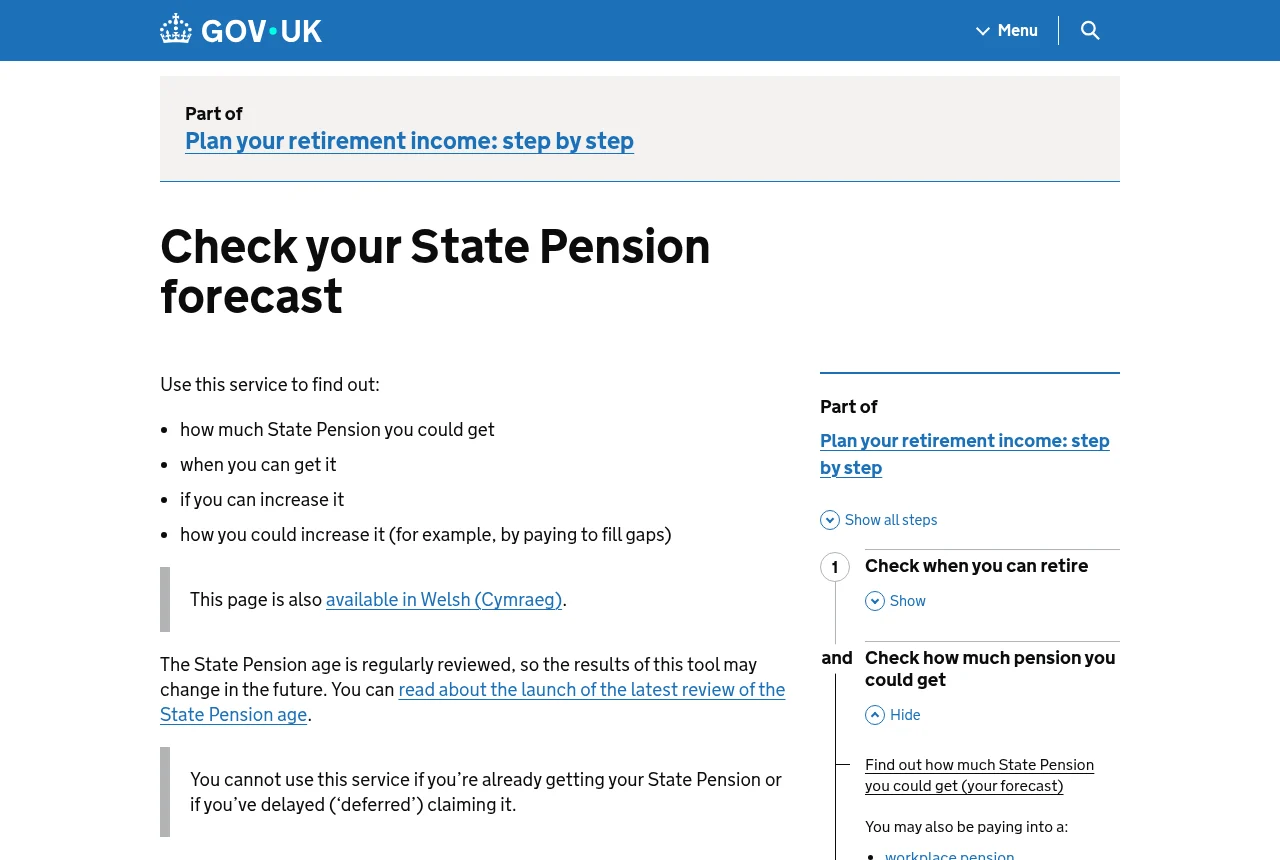
Sign in to Check your State Pension forecast. It shows what you are on course to receive and, crucially, whether contributing more would change that.
Then open Check your National Insurance record and look at the years marked as not full. These are your candidates — not your shopping list.
How many years you need depends on when your record started. Usually ten qualifying years gets you some new State Pension; usually thirty-five gets the full amount. If you were paying National Insurance before April 2016, you may need more than thirty-five because of how the old and new schemes were reconciled.
2 Confirm the gap is worth filling — before you pay
This is the step people skip, and it is the expensive one. Some non-qualifying years, particularly those before April 2016, will not increase your pension when paid. The money is not refunded because you misunderstood.
The forecast service itself flags whether a year helps. If you are under State Pension age, confirm with the Future Pension Centre before paying. If you are over it, the Pension Service is the one to ask.
Only once you have that confirmation should you look at voluntary contributions and the deadlines page.
3 Pay, by whichever route you are eligible for
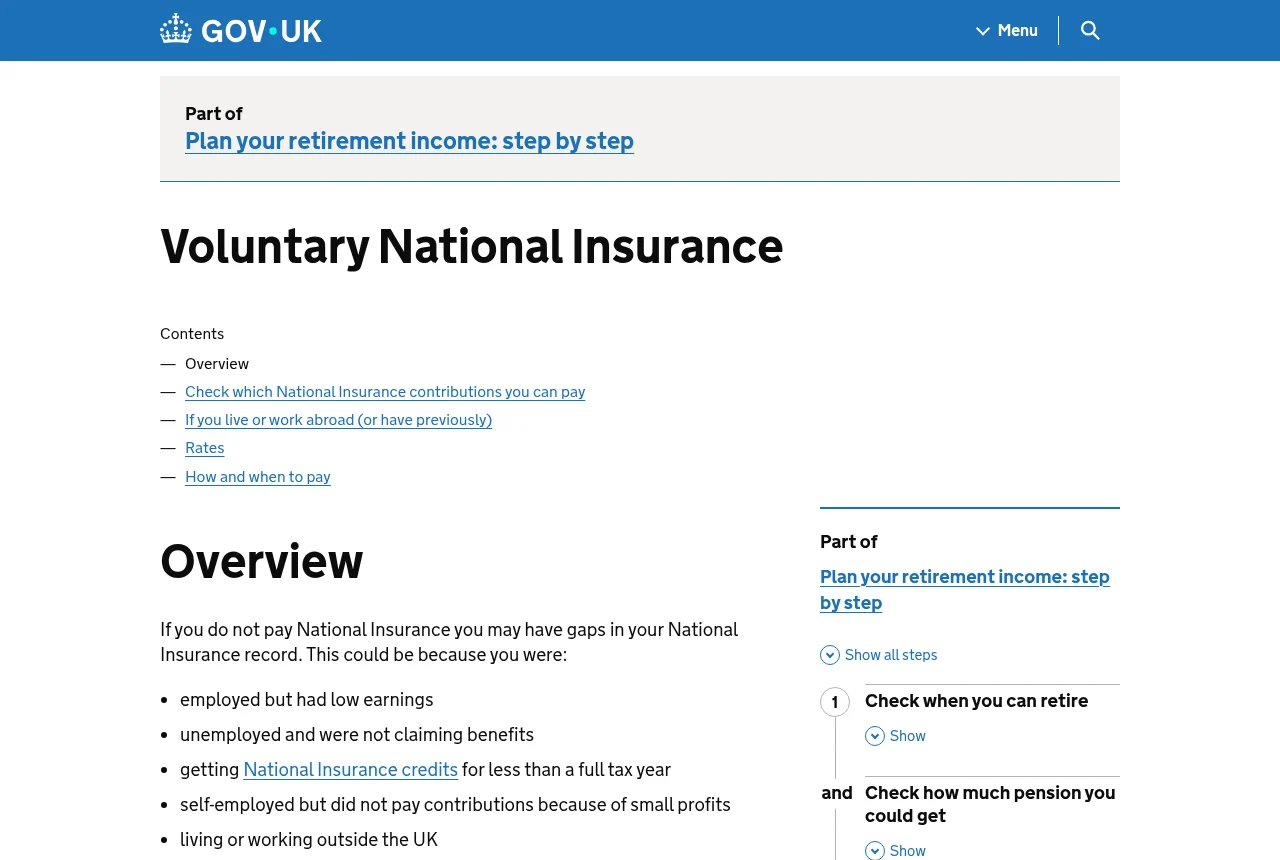
If you are under State Pension age, working in the UK, not self-employed, and have not lived or worked abroad, you can now pay chosen gaps directly through the forecast service. The record updates in up to five working days. This is new, and it replaces the old ritual of phoning HMRC for a reference number.
If you fall outside that — self-employed, or with time abroad on your record — you obtain an eighteen-digit reference and pay Class 3 by bank transfer or direct debit. Expect it to take up to eight weeks to appear.
The deadline for each year is 5 April, six years after the year in question. It rolls forward annually, which means a year you could have filled cheaply becomes unavailable while you think about it.
4 Common mistakes, and how to avoid them
Mistake 1
Paying for a gap that does not increase your pension, and discovering it afterwards.
Mistake 2
Relying on articles that still describe the closed back-to-2006 window.
Mistake 3
Trying the online payment route while self-employed or with years abroad, where it is not available.
Do this today
Open your forecast today, note which years are not full, and call the Future Pension Centre before paying for any of them.
FAQ Frequently asked questions
How many qualifying years do I need?
Usually ten qualifying years to get any new State Pension, and usually thirty-five for the full amount. If your National Insurance record started before April 2016, you may need more than thirty-five.
How far back can I pay now?
Normally only the past six tax years, with a deadline of 5 April each year. The transitional window that allowed contributions back to 2006 closed on 5 April 2025.
Can I pay the gaps online?
Yes, if you are under State Pension age, working in the UK, not self-employed and have not lived or worked abroad — through the forecast service, updating in up to five working days. Otherwise you pay Class 3 with an eighteen-digit reference.
Key takeaways
- The back-to-2006 window closed on 5 April 2025 — six years is the limit now
- Check whether a year helps before paying. Some do nothing
- Eligible people can pay through the forecast service; others need an 18-digit reference
- Every deadline is 5 April, and rolls forward each year