
It is easy to assume HMRC always has your tax code right, and that if it is wrong it will sort itself out. Neither is safe. Your code is only as good as the information HMRC holds — a company benefit that ended, a second job, or a new starter form gone missing can quietly leave you paying too much tax on every payslip.
The good news: a wrong code is usually straightforward to fix, and any overpayment comes back to you. Here is how to read your code, tell when it is wrong, get it corrected, and how the refund arrives.
Checkpoints
- Find your code in three places: your payslip, your Personal Tax Account, or the HMRC app.
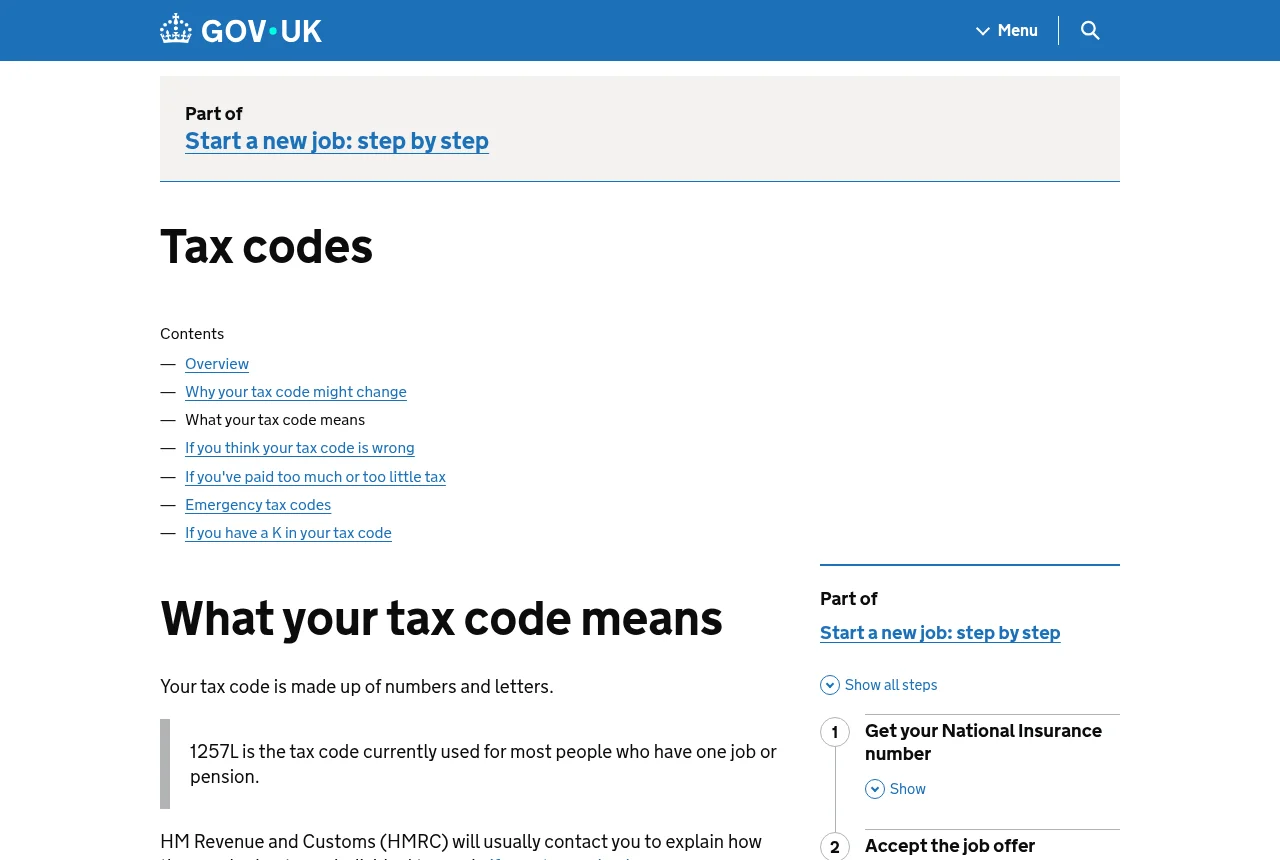
- 1257L is the standard code for most people with one job or pension.
- A code ending in W1, M1 or X is an emergency (non-cumulative) code — you may be paying the wrong amount.
- A corrected code usually refunds an in-year overpayment through your payslip, not as a separate cheque.
1 Find your tax code and read it
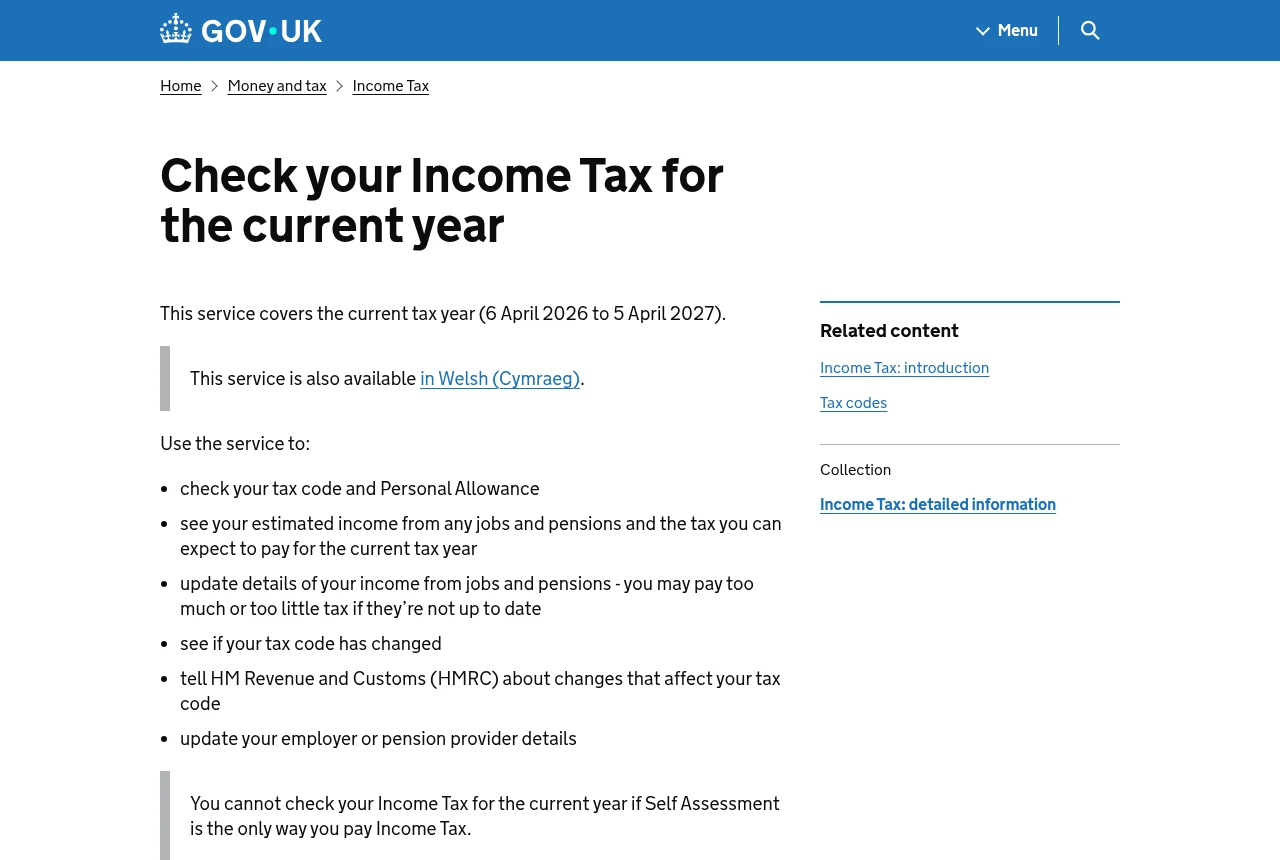
Your code is on your payslip, and in the “Check your Income Tax for the current year” service (online or the HMRC app), which also shows previous years. The number reflects your tax-free income for the year; HMRC starts from your Personal Allowance, subtracts untaxed income and deductions, and replaces the last digit with a letter.
The letters are the quickest tell. Here are the common ones — for the full list, including the Scottish (S) and Welsh (C) variants, use the GOV.UK page.
| Code or letter | What it means |
|---|---|
| 1257L | The standard Personal Allowance (most people, one job) |
| BR | All this income taxed at basic rate — usually a second job or pension |
| 0T | No allowance left, or a new job HMRC has no details for |
| K | Untaxed income is more than your allowance (the calculation is reversed) |
| W1 / M1 / X | Emergency code — tax worked out on that pay period alone |
2 Decide whether it is actually wrong
A code is usually wrong because HMRC holds stale or missing information: a company car or medical benefit that has ended but is still listed, or your allowance mis-split between two jobs. Cross-check the code against your real jobs, pensions and benefits.
Emergency codes (W1/M1/X) commonly appear after you start a new job before your employer has your previous pay and tax details. Hand your new employer your P45 to move off it.
3 Get it corrected — and get your money back
Use the “Check your Income Tax” service to review your employment, estimated income, company benefits and expenses, and update anything wrong or missing. If you cannot use the online service, contact HMRC. Once updated, HMRC tells you and your employer within about 15 working days, and the new code appears on your next payslips.
How the refund reaches you depends on timing. If it is fixed in-year, the corrected cumulative code repays the difference through your pay — no separate payment. If HMRC could not fix it in time, it reconciles after the tax year and, if you overpaid, sends a letter (the P800 route).
4 Common mistakes, and how to avoid them
Mistake 1
Assuming a wrong code self-corrects. HMRC acts on the information it holds. If a benefit ended or a job’s details are stale, you have to update them yourself online or tell HMRC.
Mistake 2
Treating BR or 0T on a second job as a mistake. That is usually correct, because your allowance is set against your main job. It is only wrong if the allowance is split incorrectly.
Mistake 3
Not giving a new employer your P45, then expecting an instant fix. Without your prior pay and tax details you stay on an emergency code, and correction can take up to 35 days.
Mistake 4
Reading the code number as your take-home pay. 1257L simply reflects the standard tax-free allowance; benefits or untaxed income lower the number. It is not your salary.
Mistake 5
Expecting a refund as an immediate cheque. In-year overpayments normally come back through your payslip once the corrected code applies.
Do this today
Sign in to “Check your Income Tax for the current year”, read your code, and update anything wrong — it is the single fastest way to fix the code and start any refund.
FAQ Frequently asked questions
I’m on an emergency tax code (W1/M1/X) — will I get overpaid tax back?
Yes, if you overpaid. An emergency code taxes each pay period in isolation, so it can be wrong. Give your new employer your P45 and check your details online. Once HMRC issues the correct cumulative code, any overpayment normally comes back through your pay; if it is not resolved in-year, HMRC reconciles after the tax year ends.
My second job is taxed at “BR” — is that a mistake?
Usually not. Your tax-free allowance is normally applied to your main job, so a second job is often correctly coded BR (all basic rate). It is only wrong if your allowance has been split incorrectly — check both codes in the Check your Income Tax service.
How long until the code changes and I’m refunded?
After you update your details, HMRC notifies you and your employer within about 15 working days, and the new code shows on your next payslips. An in-year overpayment is repaid through your pay on the same timing once the corrected code is used.
Key takeaways
- Your tax code is only as accurate as the information HMRC holds — a stale benefit or second job can cause overpayment.
- Find your code on your payslip or in “Check your Income Tax”; learn the letters (BR, 0T, K, W1/M1/X).
- Fix it by updating your details online; HMRC re-issues the code within about 15 working days.
- An in-year overpayment comes back through your payslip; if not, it reconciles after year-end via a P800.