
Two entirely different organisations decide what you pay. The Valuation Office — part of HMRC since 1 April 2026 — decides your band. Your local council decides the bill, the discounts and whether you get help paying it.
That split explains most of the confusion. It also explains why challenging your band and applying for a reduction are two separate journeys, with different rules and different risks.
Checkpoints
- Living alone: 25% off, applied for through your council
- Everyone in the home disregarded: 50% off
- Council Tax Reduction can cut the bill by up to 100%
- A band challenge can move the band up, and can trigger a look at neighbours
1 Claim the discounts you already qualify for
The single-person discount is the one most often left unclaimed after a household changes: if you are the only adult resident, you get 25% off. You apply to your council; nobody applies it for you.
Certain residents are “disregarded” — treated as though they are not there. The list is longer than people expect: under-18s, full-time students, student nurses, qualifying apprentices, 18- and 19-year-olds in full-time education, the severely mentally impaired, live-in carers (though not for a partner or a child under 18), and diplomats. If every resident is disregarded, the bill drops by 50%.
Separately, Council Tax Reduction — sometimes called Council Tax Support — is income-based help that can reduce the bill by up to 100%. Every council runs its own scheme, so the rules where you live are not the rules a friend describes.
2 Check your band before you challenge it
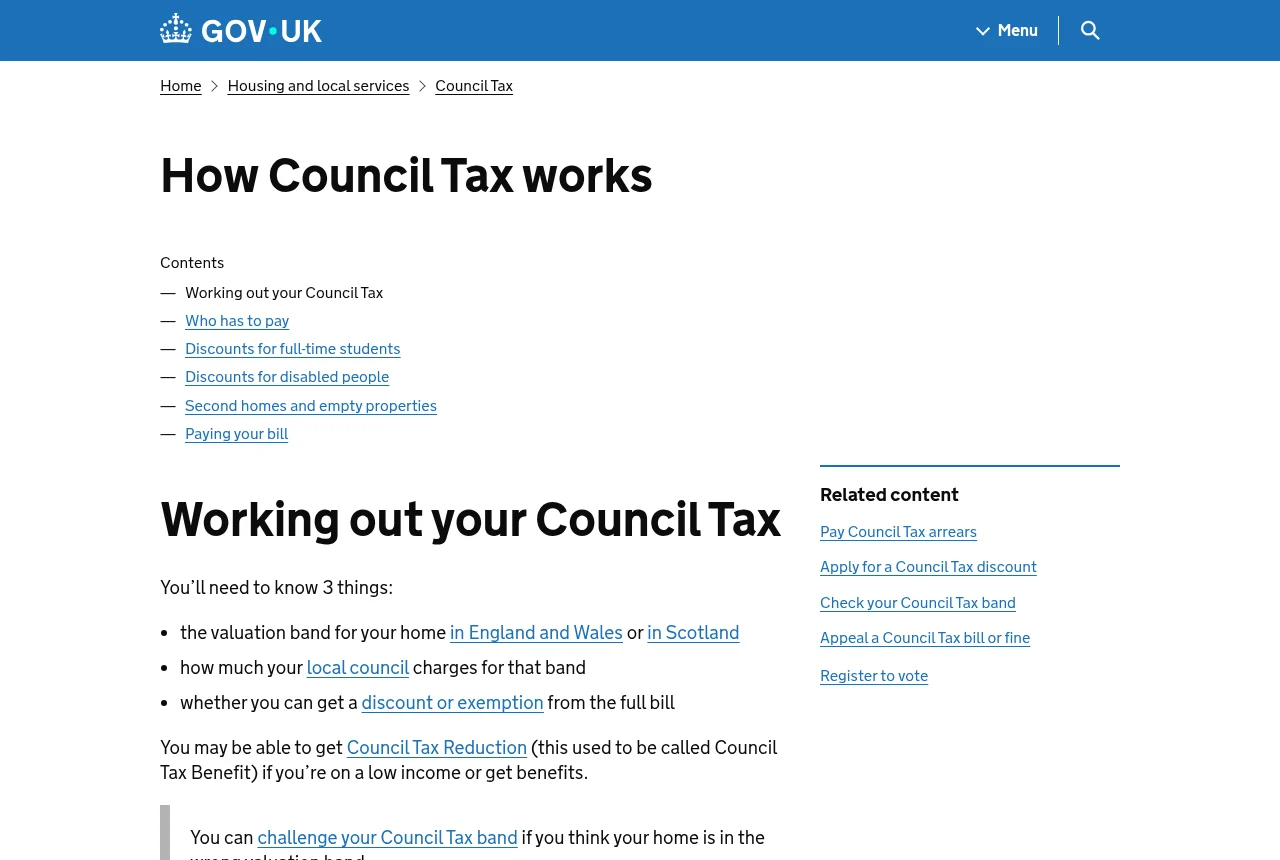
Check your band, then check the bands of genuinely similar neighbouring properties. Similar means the same size, age and type — not merely the same street.
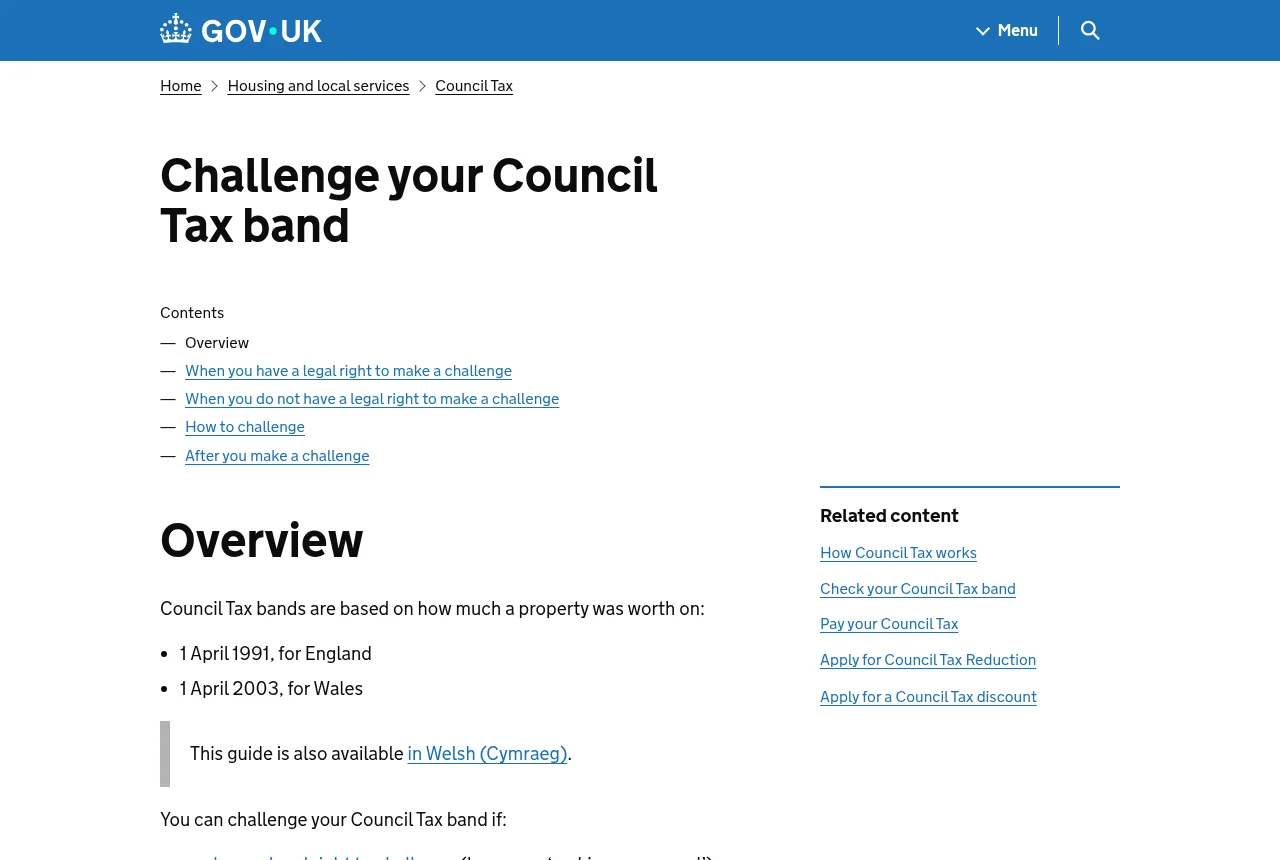
You have a legal right to make a formal proposal only in defined circumstances: you have been paying for less than six months, your band changed in the last six months, or the property or the area around it has physically changed. Outside those, you can still ask for an informal review, and the Valuation Office will look.
Build the evidence first: up to five properly comparable properties in a lower band, or sale prices from the valid window. A challenge without evidence is a request to be looked at, and being looked at is not risk-free.
3 Know which country you are in
England and Wales run Council Tax as described here, and appeals that fail go to the Valuation Tribunal.
Scotland has its own system: bands rest on 1991 values, they run A to H, and valuation is handled by the Scottish Assessors, with appeals to the First-tier Tribunal. The 25% single-adult discount applies.
Northern Ireland has no Council Tax at all. Households pay domestic rates, calculated on the property’s capital value at 2005 prices, administered by Land & Property Services.
4 Common mistakes, and how to avoid them
Mistake 1
Assuming a band challenge can only lower the bill. It can raise it, and it can pull neighbours into a review.
Mistake 2
Stopping payments while a challenge is in progress. The bill remains due.
Mistake 3
Paying a private “band reduction” agent for a service that is free.
Do this today
Check whether you qualify for the single-person discount or a disregard first — that is the fast money. Only then look at your band, and only challenge it with comparable evidence in hand.
FAQ Frequently asked questions
Is there a discount for living alone?
Yes. If you are the only adult resident, your Council Tax is reduced by 25%. You apply to your local council.
Who decides my band, and who decides whether I get help paying?
The Valuation Office — now part of HMRC — sets the band, using 1991 values in England and 2003 in Wales. Your local council sets the bill and runs its own Council Tax Reduction scheme.
Can a challenge make my Council Tax go up?
Yes. A review can result in a higher band, an unchanged band, or a lower one, and comparable neighbouring properties may also be reviewed.
Key takeaways
- 25% off if you live alone; 50% if everyone is disregarded; up to 100% via Council Tax Reduction
- Bands reflect 1991 values in England, 2003 in Wales
- A challenge is free but can move the band up — bring comparable evidence
- Scotland runs its own system; Northern Ireland has rates, not Council Tax