
Search for PIP appeals and you will be told, on page after page, that around 65% of appeals succeed. The figure is real. What almost nobody explains is what it counts — and once you know, the number stops meaning what those pages imply.
It measures the share of PIP cases cleared at a hearing that went the claimant’s way. It does not measure your chance of overturning a decision, because most decisions never reach a hearing at all. The Department’s own customer-journey figures put the end-to-end number far lower. Both are true. Confusing them is how people end up with the wrong expectation at the worst moment.
Checkpoints
- The ~65% figure is the share of PIP cases cleared at a hearing that succeeded. Against all initial decisions, roughly 3% are overturned at a hearing.
- Mandatory reconsideration is compulsory before you can appeal, and there is a one-month deadline at each stage.
- Asking for a reconsideration reopens the whole claim — GOV.UK warns the award may stop, stay the same, increase or decrease.
- Since 30 April 2026, doing paid work or volunteering is no longer, by itself, a reason to reassess a PIP award.
1 What the 65% actually measures — and the figure that matters more
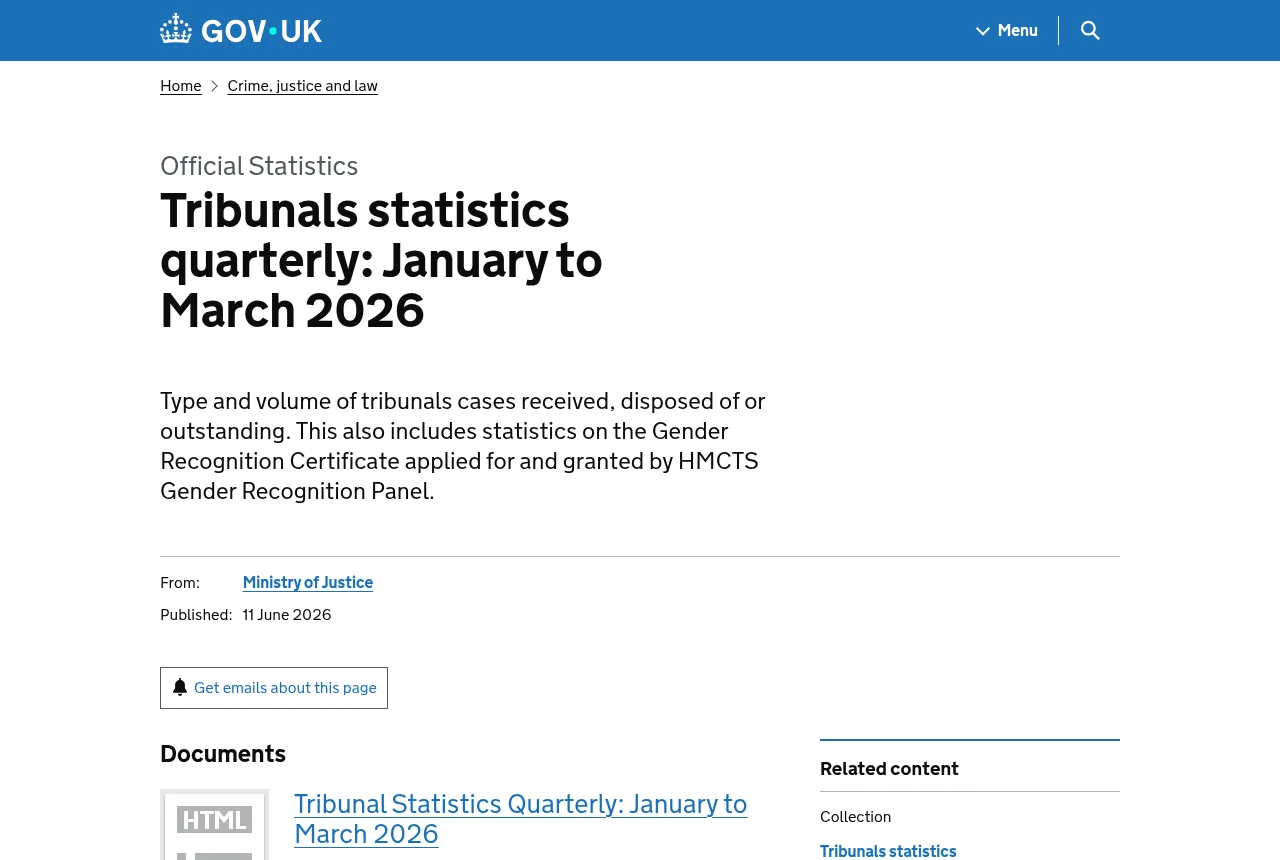
The Ministry of Justice publishes tribunal outcomes by benefit. For PIP, the share of cases cleared at a hearing that were decided in the claimant’s favour has drifted down over recent years and sits in the mid-sixties for the most recent year — which is published as provisional and will move. Worth noting, because “and still falling” is the usual framing: the most recent single quarter actually went up on the three before it.
But roughly a third of PIP appeals are cleared without a hearing, and that is where the real story is. The Department’s own end-to-end statistics show that of the appeals that get lodged, a meaningful share are conceded by DWP before the tribunal sits — the decision is simply changed. For disputes about award reviews, that share approaches half. Measured against every initial decision made after an assessment, only about 3% end up overturned at a hearing.
Read together, those numbers say something more useful than the headline. Getting to a hearing is hard and slow, and comparatively few disputes travel that far — but a great many are resolved earlier, by DWP itself, once a proper challenge is on the table. The queue is also at its highest since the series began in 2016/17, up around 30% in a year, so the wait is real. (MoJ has flagged a data-quality issue that may revise the open-caseload figures down, which is another reason to check the current publication rather than trust a number in an article.)
| What you often read | What it actually counts |
|---|---|
| “65% of PIP appeals succeed” | Cases cleared at a hearing that were decided in the claimant’s favour |
| — | Around a third of PIP appeals are cleared without a hearing |
| — | A share of lodged appeals are changed by DWP before the hearing — far higher for award reviews |
| — | About 3% of initial decisions are overturned at a tribunal hearing |
| “Appeals take X weeks” | Published waiting times cover the whole tribunal chamber, not PIP alone |
2 Two stages, two one-month deadlines — and one risk nobody mentions
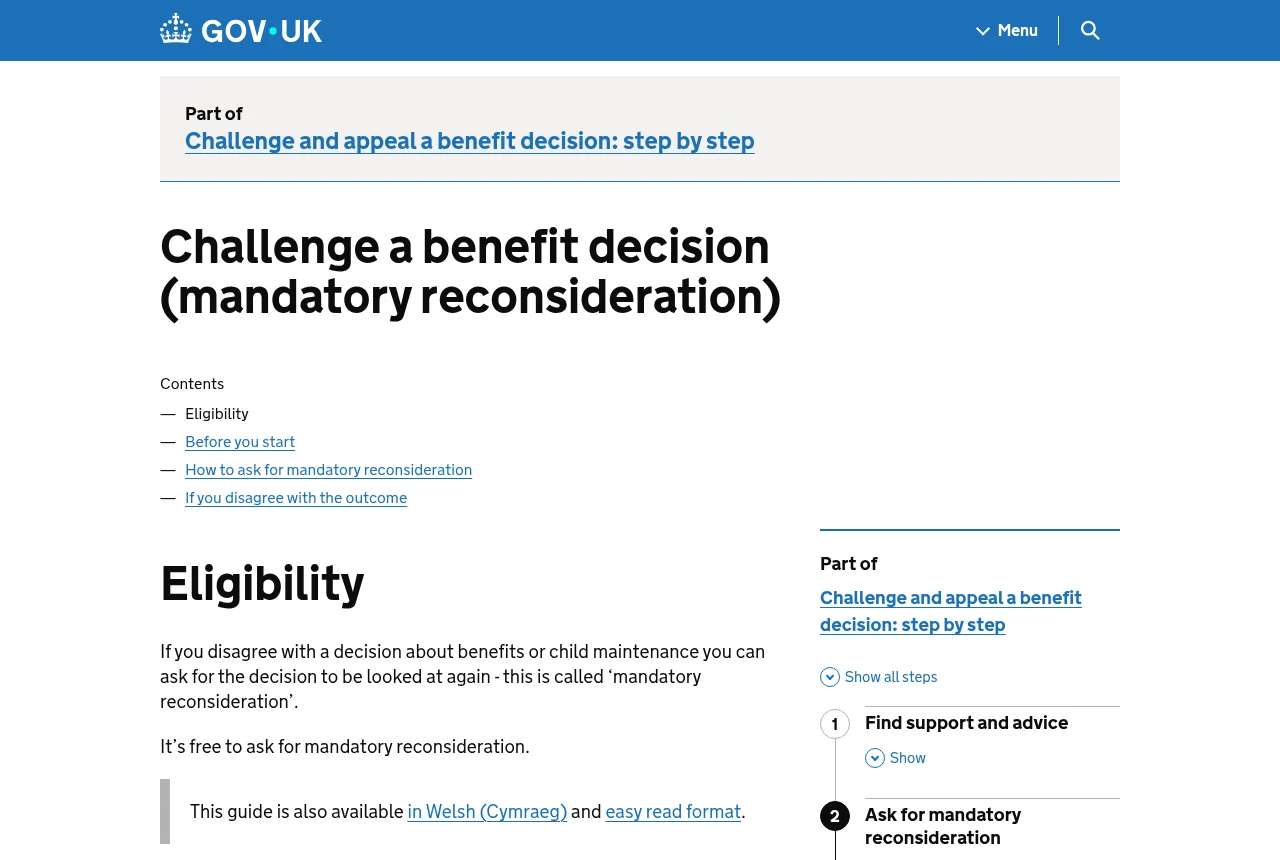
You cannot appeal a PIP decision straight to a tribunal. You must first ask DWP for a mandatory reconsideration, within one month of the date on the decision letter. Only once you hold the mandatory reconsideration notice can you appeal, and that appeal must be lodged within one month of the date the notice was sent to you. Both stages are free. For PIP you do not need to request a written statement of reasons separately — the decision letter contains it.
Missing a deadline is bad but not automatically fatal. Both stages have a late route with an absolute backstop of roughly twelve further months, though the longer you leave it the more compelling your reason has to be, and at the reconsideration stage a refused extension cannot be renewed. Do not plan around this.
Now the part that gets skipped. GOV.UK states plainly that asking for a reconsideration means someone looks at your whole claim again, and that your benefit may stop, stay the same, increase or decrease. If you already hold an award and are disputing only part of it, take advice before you file. That warning is on the official page and is routinely omitted from the blogs that rank above it.
3 Three things that changed in 2025–26 that most pages still get wrong
Work no longer triggers a reassessment on its own. Regulations that came into force on 30 April 2026 inserted a provision into the PIP rules stating that doing work for payment, or in expectation of payment, or doing voluntary work, is not a reason for a fresh determination. Parallel changes were made for Universal Credit and ESA. This is settled law now, and it removes a fear that kept a lot of people out of work.
The “4-point rule” is not law. It was a clause in a Bill introduced in June 2025 — a Bill whose title then included the words “and Personal Independence Payment”. The clause was removed before the Bill left the Commons, and the words came out of the title too. The Act as passed contains no PIP provision at all, and the assessment descriptors are untouched. Pages describing it as live are describing something that was dropped.
The Timms review has not recommended anything yet. Its interim report, published in July 2026, says in terms that it makes no recommendations — those come in the final report in the autumn, and they are recommendations to the Secretary of State, not decisions. Its blunt summary line is that PIP is not working. Anything you read about future PIP design is a proposal under review, not a rule.
4 Common mistakes, and how to avoid them
Mistake 1
Treating the headline success rate as your personal odds. It measures cases cleared at a hearing; only around 3% of initial decisions are overturned at one, and most disputes are resolved — or abandoned — long before that point.
Mistake 2
Trying to appeal first. Mandatory reconsideration is compulsory, and the tribunal cannot take your appeal until you hold the reconsideration notice.
Mistake 3
Assuming a reconsideration can only help. GOV.UK warns the whole claim is looked at again and the award may be reduced or stopped — if you already hold an award, get advice before filing.
Do this today
If a PIP decision is wrong, start the mandatory reconsideration — the one-month clock runs from the date on your decision letter, not from when you opened it. Before you send anything, check the official evidence list, and if you hold an existing award, take advice first.
FAQ Frequently asked questions
How long do I have to challenge a PIP decision?
One month at each stage: one month from the date on the decision letter to ask for a mandatory reconsideration, then one month from the date the reconsideration notice was sent to lodge an appeal. Both are free. Late applications are possible with a reason, subject to an absolute backstop of about twelve further months at each stage.
How often does DWP change its mind at the reconsideration stage?
Over the five years to April 2026, a little under a third of reconsiderations cleared — excluding those withdrawn — led to a change in award, and the most recent quarter was slightly below that. Check the current DWP statistics publication for the up-to-date figure, as it moves every quarter.
Will my payments continue while I challenge the decision?
GOV.UK confirms PIP continues while an award is being reviewed, but it sets out no mechanism for payment to continue while a mandatory reconsideration or appeal is outstanding. In practice, if an award is reduced or ended, the new decision takes effect and money is paid as arrears only if the challenge succeeds. Take advice if this would cause hardship.
Key takeaways
- The quoted success rate covers cases cleared at a hearing; measured against all initial decisions, roughly 3% are overturned there.
- A meaningful share of lodged appeals are conceded by DWP before any hearing — nearly half in award-review disputes.
- Mandatory reconsideration is compulsory, both stages carry a one-month deadline, and reconsideration reopens the whole claim.
- Since 30 April 2026, doing paid or voluntary work is no longer by itself a reason for a fresh determination.