
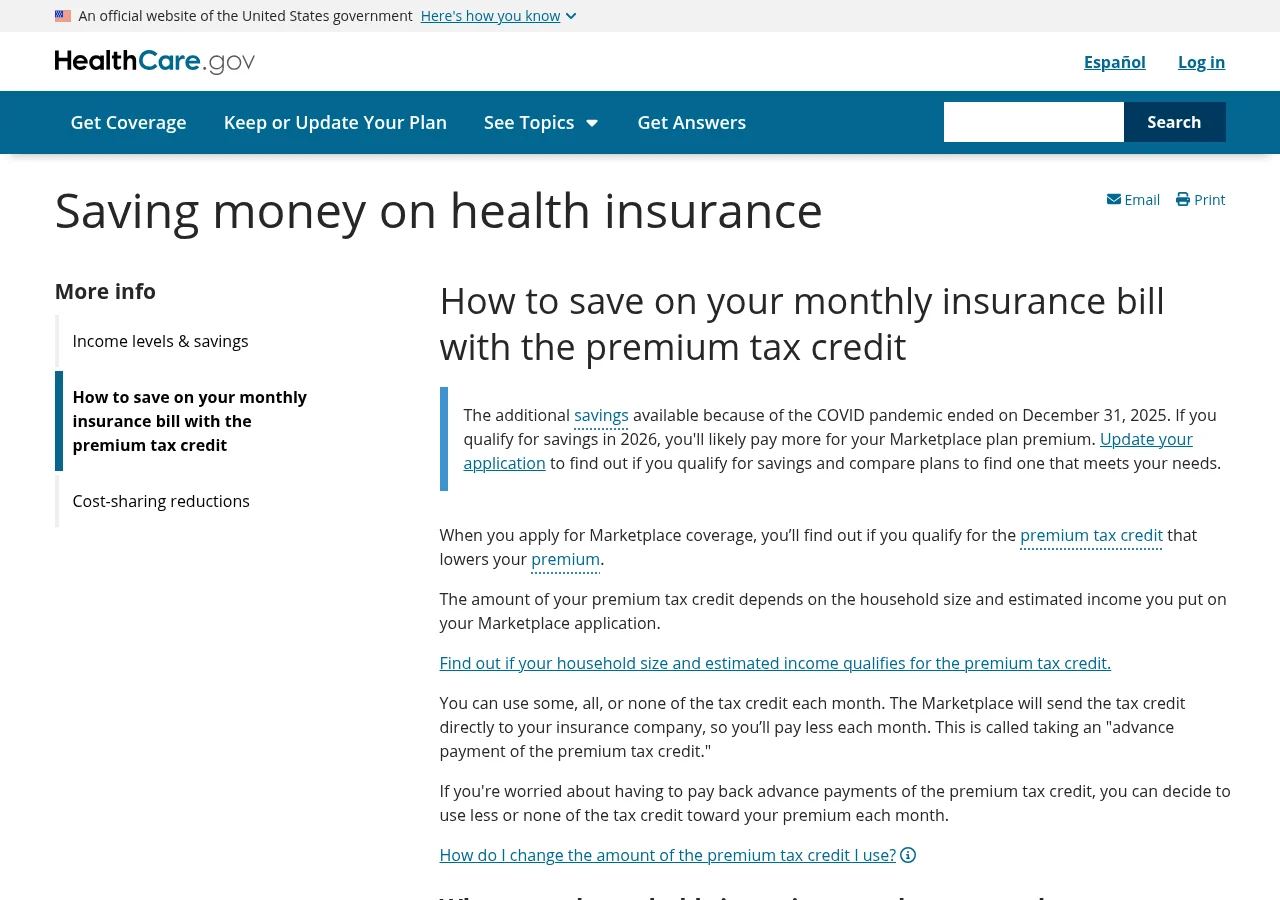
If your Marketplace premium jumped, you are not imagining it. HealthCare.gov states it directly: the additional savings available because of the COVID pandemic ended on December 31, 2025, and if you qualify for savings now, you will likely pay more than before.
What did not disappear is the ordinary premium tax credit, which predates the pandemic and is still law. Most of the confusion right now comes from people conflating the two, or assuming that because the boost is gone there is no help at all.
Checkpoints
- Apply once at HealthCare.gov and it screens you for the premium tax credit and Medicaid/CHIP
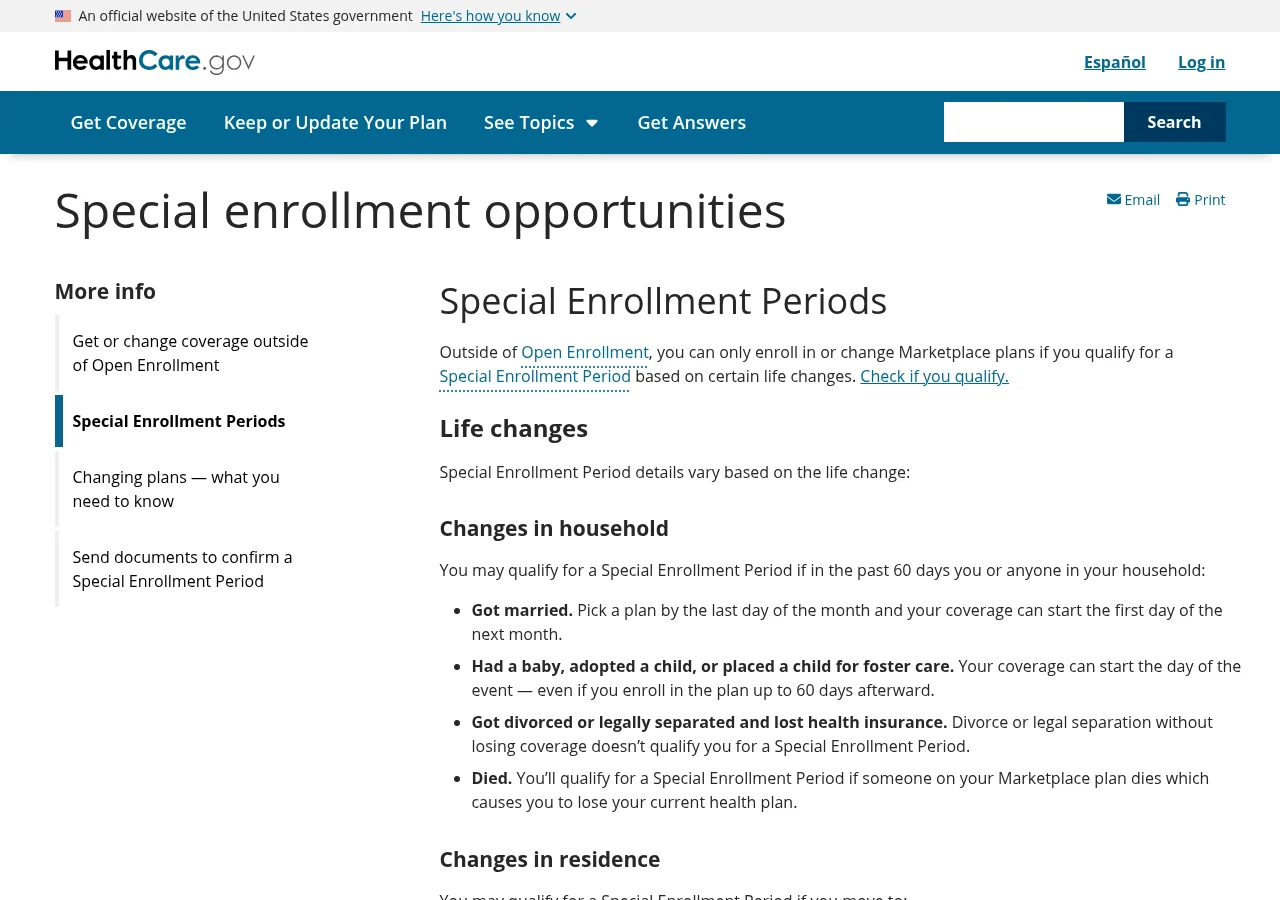
- Outside Open Enrollment you need a qualifying life event — generally within the past 60 days
- Enrollment is not complete until you pay the first premium
- Advance credits are reconciled on your tax return — underestimate your income and you repay
1 Find out whether you can enroll right now
The Marketplace has one annual window plus exceptions. The window just got shorter. Starting with 2027 coverage, Open Enrollment on the federal Marketplace runs November 1 through December 15 — the January 15 close and the February 1 coverage start that applied through 2026 are gone, and every Open Enrollment sign-up now takes effect January 1. State-run marketplaces set their own dates within federal limits, so confirm on the dates and deadlines page rather than assuming.
Outside that window you need a Special Enrollment Period. You generally qualify if, within the past 60 days, you lost health coverage, or had a change in household (marriage, a birth, adoption or foster placement, a divorce or separation that cost you coverage, a death), or a change in residence such as moving to a new ZIP code or county.
The fastest way to know is the HealthCare.gov screener, which tells you whether you can enroll today.
2 Let one application decide which program you land in
You report household size and estimated income for the coverage year. Based on that, the Marketplace tells you whether you qualify for the premium tax credit — and whether anyone in your household qualifies for Medicaid or CHIP instead, which are typically free or very low cost.
Apply even if you think you earn too much or too little. Medicaid eligibility varies substantially by state, children frequently qualify for CHIP when their parents do not, and the single application screens for all of it.
You can apply online, by phone, in person with local help you search for by ZIP code, through a certified enrollment partner, or on paper — the paper route returns eligibility results by mail in about two weeks.
3 Decide how much credit to take in advance — and report changes
If you qualify, you choose how much of the credit to take as an advance payment each month. The Marketplace pays it straight to your insurer, lowering what you owe. You may take all of it, some of it, or none and claim the whole amount at tax time.
The advance is based on an income you estimated. At tax time you reconcile it on your federal return using Form 1095-A. If you earned more than you projected, you repay the difference. This surprises people every single year.
The defense is simple: report changes when they happen — a raise, a new job, a marriage, a move, a change in household size. The Marketplace adjusts your credit going forward, and you avoid a bill in April.
4 Common mistakes, and how to avoid them
Mistake 1
Assuming the pandemic-era enhanced subsidies still apply. HealthCare.gov states they ended on December 31, 2025.
Mistake 2
Missing Open Enrollment and not realizing that re-entry requires a qualifying life event within the past 60 days.
Mistake 3
Underestimating income for the year, then owing back the excess advance credit at tax time.
Do this today
Run the HealthCare.gov screener to see whether you can enroll today, then complete the single application — it decides between the premium tax credit and Medicaid/CHIP for you.
FAQ Frequently asked questions
Did the bigger subsidies really go away?
Yes. HealthCare.gov states that the additional savings available because of the COVID pandemic ended on December 31, 2025, and that people who qualify for savings will likely pay more. The regular premium tax credit still exists.
When can I enroll?
During the annual Open Enrollment window on your Marketplace, or at any time you qualify for a Special Enrollment Period after a life event such as losing coverage, marrying, having a child, or moving. Medicaid and CHIP accept applications year-round.
How does the premium tax credit actually reach me?
You can have it paid in advance directly to your insurer each month, which lowers your premium, or claim it in full on your tax return. Either way it is reconciled against your actual income when you file, using Form 1095-A.
Key takeaways
- The enhanced credit expired 2025-12-31; the regular premium tax credit remains
- Outside Open Enrollment you need a qualifying life event, generally within 60 days
- One application screens for both the tax credit and Medicaid/CHIP, which are open year-round
- Report income changes during the year or repay the excess advance credit at tax time