

Payroll stubs did not change. Tips are still wages, overtime is still wages, and both still show up on your W-2 as taxable income. The phrase “no tax on tips” describes something narrower than it sounds: a capped deduction you claim once a year, on a form that did not exist until late 2025.
The distinction matters because it decides what you actually get back and when. Below is what qualifies, where the numbers come from, and the three places people misread the rule.
Checkpoints
- Tips and overtime remain taxable and remain subject to Social Security and Medicare tax.
- You can claim the deduction on top of the standard deduction — you do not need to itemize.
- The amounts are capped and shrink as income rises.
- If you are married and file separately, you cannot claim any of these deductions.
1 Check whether your pay actually qualifies
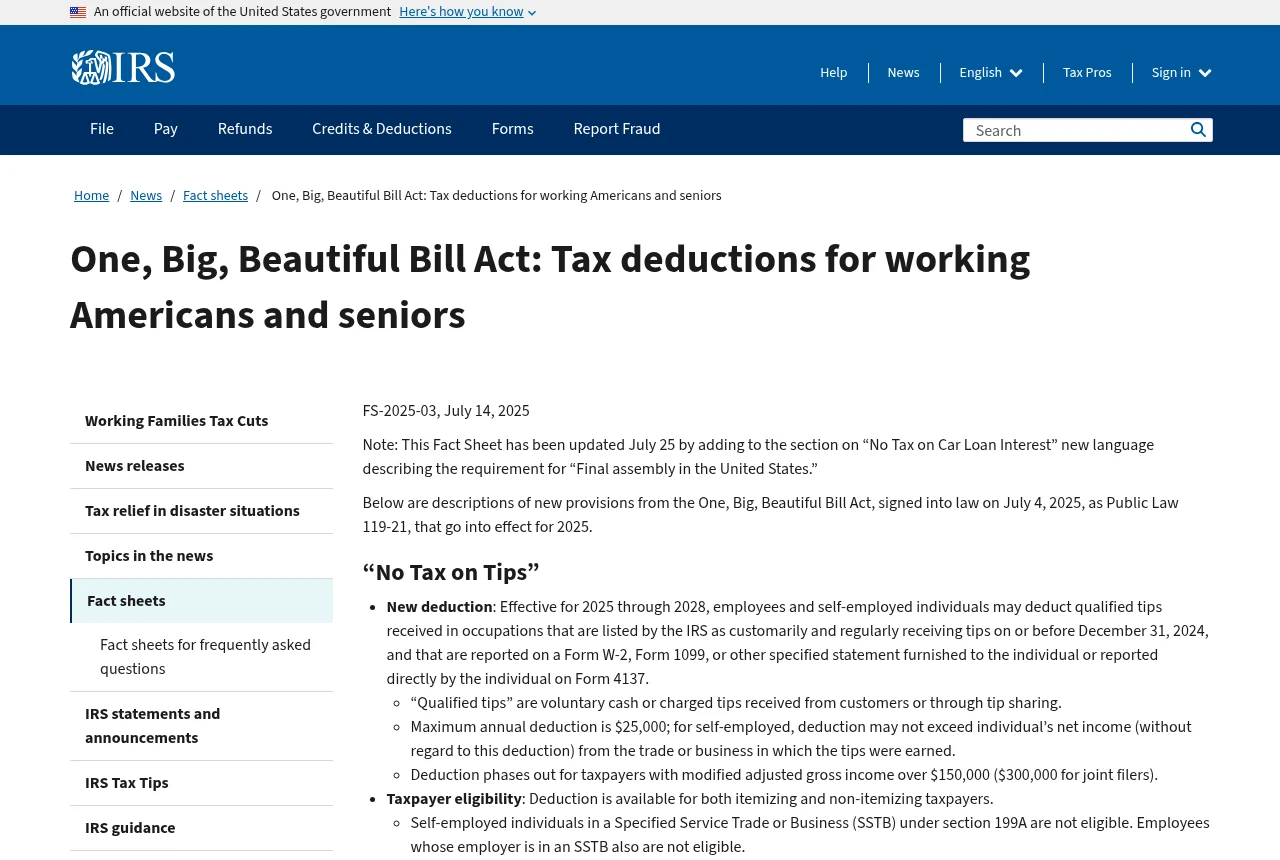
Tips only count if you work in an occupation that customarily and regularly received tips before 2025. The IRS publishes the list, and it is longer than most people assume — it reaches past restaurants into home services, personal care, recreation and delivery work. Tips earned in a specified service trade or business, such as health care, law, accounting or consulting, are excluded no matter how they were paid.
Overtime is narrower still. Only the premium portion counts: the extra amount above your regular rate that federal law requires. The base pay inside an overtime hour does not qualify, and overtime owed only under a state law or a union contract does not qualify either.
| Deduction | Maximum | The restriction people miss |
|---|---|---|
| Qualified tips | $25,000 | Occupation must be on the IRS list, and not a specified service trade or business |
| Qualified overtime | $12,500 single / $25,000 joint | Only the premium half required by federal law |
| Car loan interest | $10,000 | New vehicle, assembled in the U.S., loan taken after 2024, secured by a first lien |
| Senior deduction | $6,000 per eligible person | Age 65 or older, with a valid Social Security number |
2 Pull the numbers from your own records
For the 2025 tax year the W-2 was not redesigned, and employers were not required to break out qualified tips or overtime anywhere on it. That means nobody hands you the figure. You reconstruct it: tips generally from the Social Security tips box plus anything you reported separately, overtime from your pay stubs. A car loan claim also needs the vehicle identification number.
Keep the underlying records. A daily tip log and a year of pay stubs are what turn a claim into a defensible one. From the 2026 tax year onward employers must report these amounts separately, so this reconstruction step is temporary.
3 Claim it on Schedule 1-A
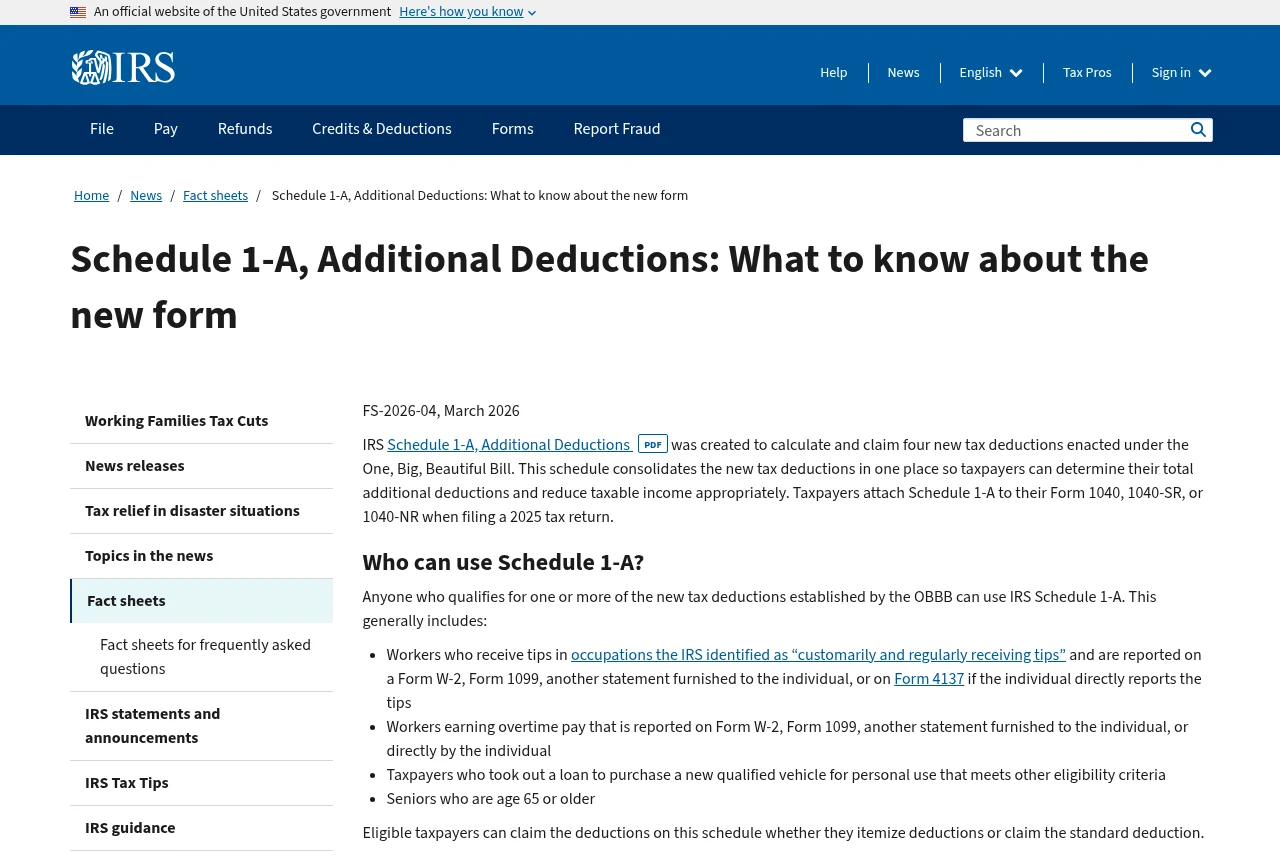
Schedule 1-A is the new form. It walks through each deduction in its own part, applies the income phase-out, and carries one total onto your Form 1040. That total lands below your adjusted gross income, which is why it lowers taxable income without lowering AGI — the figure many income-tested programs actually look at.
Filing the form does not make your paychecks bigger. If you want the benefit during the year rather than as a refund, you have to give your employer a new W-4 and enter the amount in the deductions step. Your Social Security and Medicare withholding will not move either way.
4 Common mistakes, and how to avoid them
Mistake 1
Treating the pay as tax-free. It is taxable income; you get a deduction against part of it, and Social Security and Medicare tax are untouched.
Mistake 2
Deducting an entire overtime paycheck. Only the premium half above your regular rate qualifies, and only when federal law required it.
Mistake 3
Waiting for the employer to label it. For 2025 the W-2 shows nothing, and no one will compute the number for you.
Do this today
Look up your job title on the IRS tipped-occupation list tonight. It takes a minute, and it decides whether the rest of this applies to you at all.
FAQ Frequently asked questions
Are tips and overtime now tax-free?
No. They stay taxable and stay subject to Social Security and Medicare tax. You get an income-tax deduction for a capped portion, for tax years 2025 through 2028, claimed on Schedule 1-A.
Do I have to itemize to claim it?
No. It sits on top of the standard deduction. Itemizers and non-itemizers both claim it the same way.
Will the amount appear on my W-2?
Not for the 2025 tax year. The forms were unchanged and separate reporting was not required, so you work the figure out from your tip records and pay stubs. Separate employer reporting begins with the 2026 tax year.
Key takeaways
- Tips and overtime are taxable wages; the change is a capped deduction, not an exemption.
- Social Security and Medicare tax are unaffected, and state treatment depends on your state.
- Claim it on Schedule 1-A, whether or not you itemize. Married filing separately cannot claim it.
- For 2025 you compute the amounts yourself — your W-2 will not show them.