
Posts promising a ‘tariff rebate check’ can look official long before any payment exists. As of July 21, 2026, H.R. 6781, the Trump Tariff Rebate Act, is listed by Congress.gov as introduced and referred to the House Ways and Means Committee.
That status does not create a payment, open an application, or authorize anyone to collect your bank information. The proposal describes a tax-code change, and a proposed deduction is not automatically a check mailed to every household.
Checkpoints
- H.R. 6781 is shown as introduced, not enacted, on Congress.gov.
- The proposal concerns an increase to the standard deduction for specified tax years, not an approved universal check.
- Eligibility and delivery details can only come from final law and official IRS guidance.
- There is no legitimate fee to reserve or expedite a benefit that has not been enacted.
1 Read the status, not just the bill title
Open Congress.gov and look at the tracker and latest action. ‘Introduced’ means a member submitted a proposal. It does not mean the House and Senate passed it or that it became law.
A bill can also change substantially during the legislative process. Figures and eligibility language in an early version should not be used as a promised household payment.
2 Check whether the IRS has implementation guidance
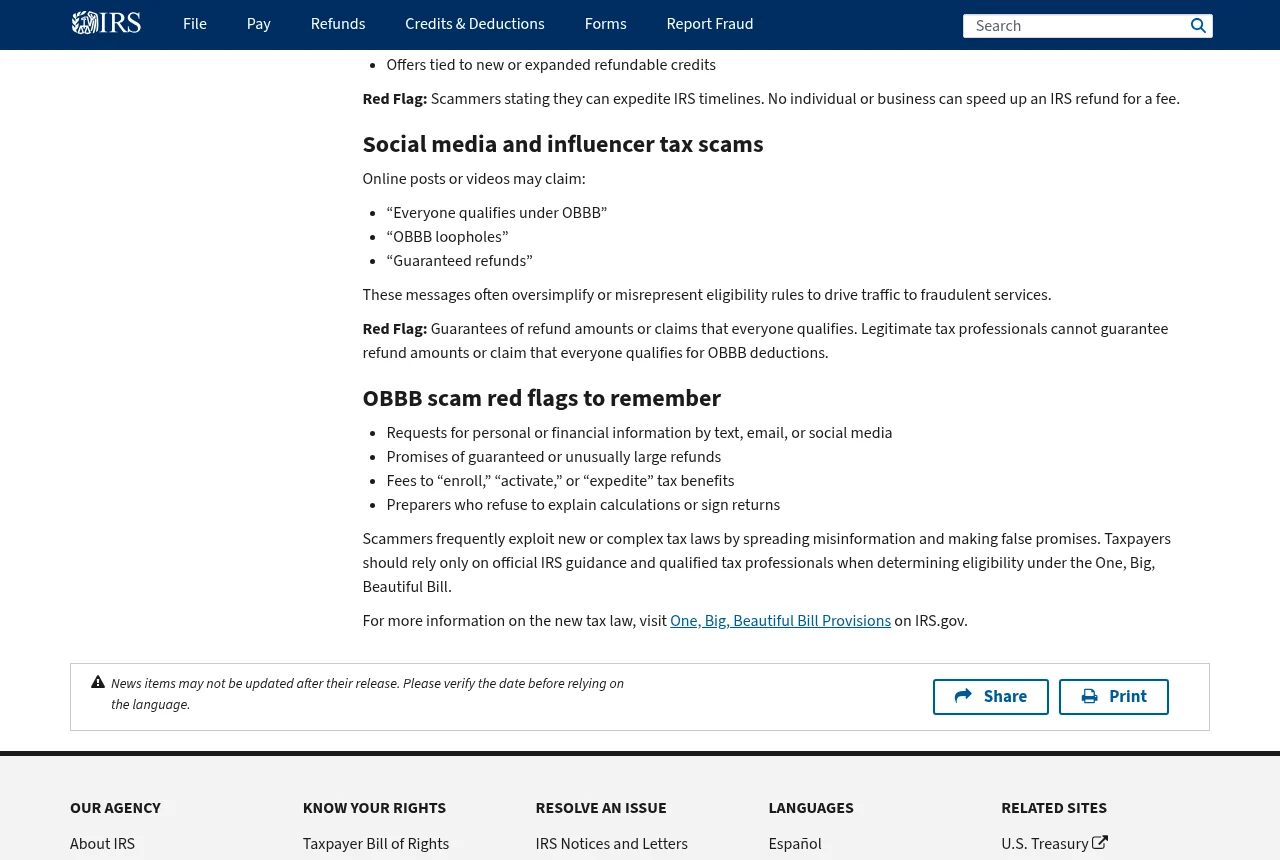
If a federal tax benefit becomes law, IRS.gov will explain who qualifies, how it appears on a return, which forms apply, and whether taxpayers need to take action. A private calculator or social post cannot create an IRS program.
The proposal’s title uses the word rebate, but its official title describes a proposed standard-deduction increase for tax years 2026 and 2027. A deduction reduces taxable income under applicable rules; it is not automatically the same as a cash check.
3 Respond safely to rebate messages
Do not click an unsolicited application link, pay an enrollment fee, or share a one-time code. Type IRS.gov or Congress.gov into your browser and navigate from the official site.
If you already shared sensitive information, save the message, stop contact, report the phishing attempt, monitor financial accounts, and use IdentityTheft.gov if identity information may be compromised. A free credit freeze can help prevent new-account fraud.
| Claim | What proves it |
|---|---|
| A bill was proposed | Congress.gov status |
| The bill became law | Enacted law and final actions |
| The IRS opened a program | IRS.gov guidance or form |
| A payment is scheduled | Official Treasury or IRS announcement |
4 Common mistakes, and how to avoid them
Mistake 1
Reading ‘introduced’ as ‘approved’ or ‘signed into law’.
Mistake 2
Assuming a proposed standard deduction equals a check for everyone.
Mistake 3
Using a private enrollment page before checking IRS.gov.
Mistake 4
Paying a fee or sharing a verification code to expedite a supposed rebate.
Do this today
Check the official bill tracker before trusting any payment amount or application link.
FAQ Frequently asked questions
Has a 2026 tariff rebate check been approved?
Congress.gov lists H.R. 6781 as introduced and referred to committee as of July 21, 2026. That is not an enacted payment program.
Does the proposal send everyone a check?
The official title describes a proposed increase to the standard deduction for specified tax years. Final effects would depend on enacted text and IRS guidance.
Where should I apply?
There is no official application created by an introduced bill. Do not submit personal information to sites claiming to reserve a payment.
Key takeaways
- H.R. 6781 is introduced, not enacted.
- A proposed deduction is not automatically a universal cash check.
- Wait for enacted law and official IRS implementation guidance.
- Never pay or share sensitive data to reserve a supposed rebate.