

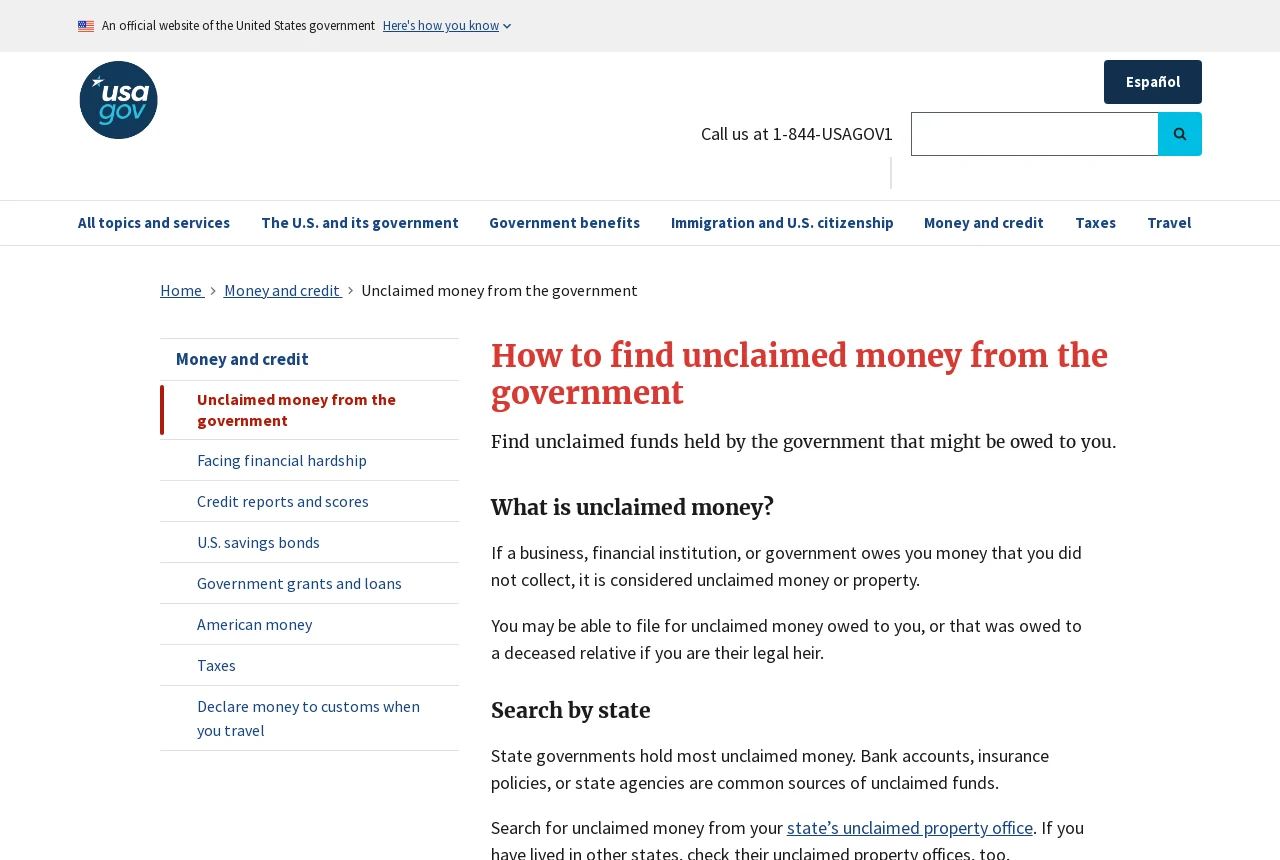
A forgotten security deposit. A final paycheck that never cleared. An insurance payout mailed to an address you left a decade ago. When money goes unclaimed long enough, it does not vanish — it gets handed to a government office that holds it for you, indefinitely, waiting for you to ask.
The catch is that nobody sends you a letter. And there is no single website that searches everything at once. USAGov says so plainly: you have to check one category at a time. The good news is that every legitimate search below is free, and most take under five minutes.
Checkpoints
- Start at usa.gov/unclaimed-money — it is the official index of where to look
- For state-held property, search every state you have ever lived in, not just your current one
- Pensions, failed banks and FHA refunds each have their own separate federal search
- You never need to pay a finder — every official search is free
1 Search your states first — this is where most of it sits
The single largest pool is state unclaimed property: dormant bank accounts, uncashed checks, utility deposits, insurance proceeds, contents of abandoned safe deposit boxes. Each state runs its own program, and by law they hold the money for you rather than spending it.
Two free front doors lead there. Unclaimed.org is run by NAUPA, the association of state unclaimed-property administrators, and links you to each state’s official program. MissingMoney.com is the free multi-state search NAUPA manages, so you can sweep several states in one query.
The mistake almost everyone makes is searching only where they live now. Money is held by the state where the business that owed you was located, or where you lived at the time. If you have moved across state lines, search each one.
2 Then work through the federal buckets, one at a time
Federal money is scattered across agencies, and each keeps its own list. None of them talk to each other. Here is where to look and what each covers.
| If you are looking for… | Search here |
|---|---|
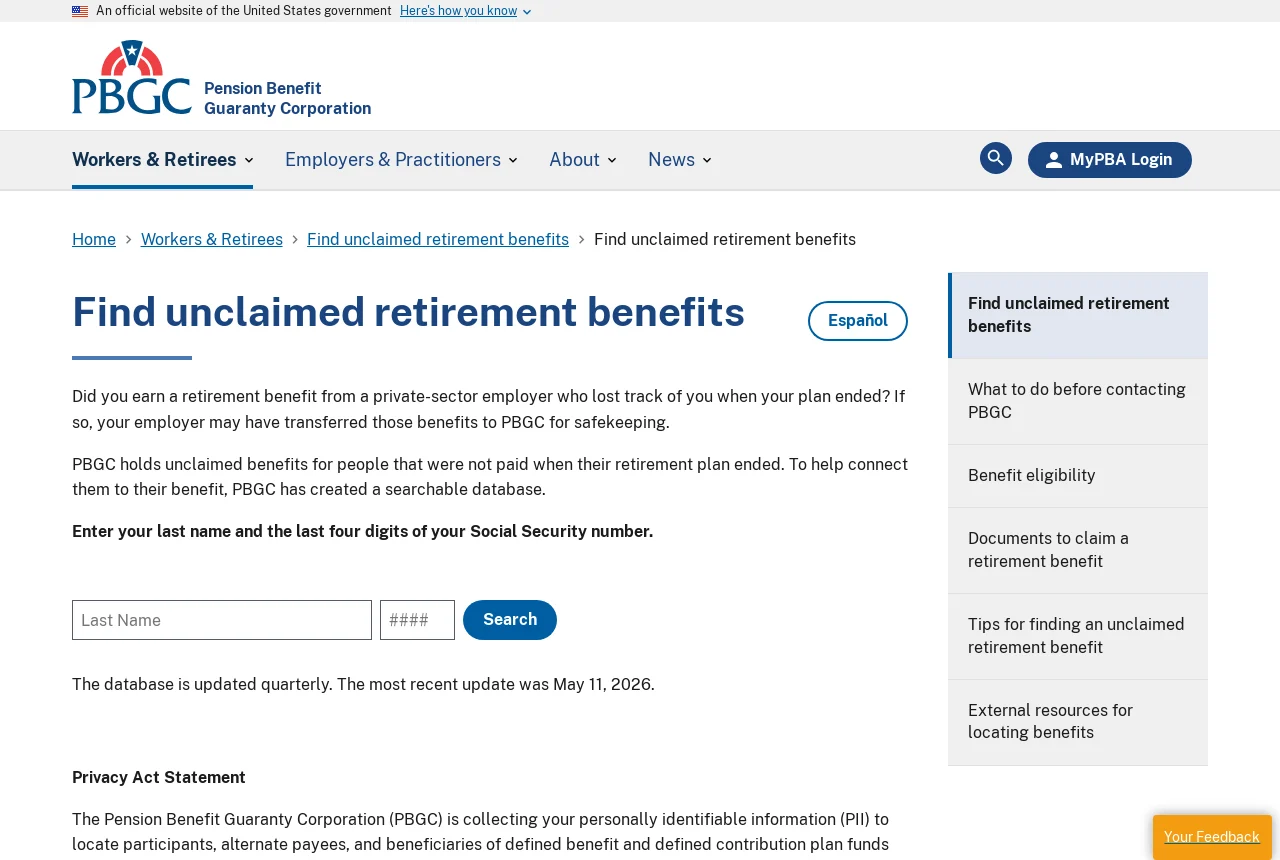
| A pension from an employer whose plan ended | PBGC Unclaimed Retirement Benefits — enter last name and last four of your SSN |
| Deposits at a bank that failed | FDIC unclaimed funds |
| Deposits at a credit union that was liquidated | NCUA unclaimed deposits |
| An FHA mortgage insurance refund | HUD — Does HUD Owe You a Refund? |
| Matured savings bonds you never cashed | TreasuryHunt.gov |
| Back wages an employer never paid | Department of Labor — Workers Owed Wages |
3 Claim it — and do not pay anyone to help
A hit in a database is not a payout. Each program has its own claim form, and each will ask you to prove you are who you say you are: government ID, Social Security number, and something tying you to the old address or account.
This is where “asset recovery” firms appear, offering to retrieve “your” money for a percentage. They are finding the same free public records you just did. HUD states it directly on its own refund page: you do not need to pay another person or firm to collect your refund. NAUPA says the same about state searches — it’s free.
If a claim is denied because you cannot document the connection, the money stays held. It does not expire. Come back when you find the old lease, the bank statement, or the probate paperwork.
4 Common mistakes, and how to avoid them
Mistake 1
Searching one website and assuming it covered everything — USAGov explicitly states no single database exists.
Mistake 2
Checking only your current state, when the money is held by a state you moved away from years ago.
Mistake 3
Paying a “finder” or asset-recovery firm a percentage of money you could have claimed yourself for free.
Do this today
Open MissingMoney.com and search your name in every state you have lived in. Then run the PBGC pension search. Together it takes about ten minutes.
FAQ Frequently asked questions
Is searching for unclaimed property actually free?
Yes. NAUPA, the association of state unclaimed-property administrators, states that searching is free, MissingMoney.com is free, and the federal databases at PBGC, FDIC, NCUA and HUD are all free to search and to claim from.
Is MissingMoney.com legitimate, or a lookalike site?
It is legitimate. MissingMoney.com is the free multi-state search site managed by NAUPA itself, and unclaimed.org links to it alongside each individual state program.
What happens to failed-bank deposits if I miss the deadline?
After the 18-month claim period, the FDIC transfers custody to the state or territory of the depositor’s last known address. The money is not forfeited — you claim it through that state’s unclaimed-property program instead.
Key takeaways
- No single portal exists — check state property, pensions, failed banks, FHA refunds and savings bonds separately
- Search every state you have lived in, plus name variations and former addresses
- FDIC and NCUA claims move to the state after 18 months; state-held money does not expire
- Never pay a finder — HUD and NAUPA both say so on their own pages