

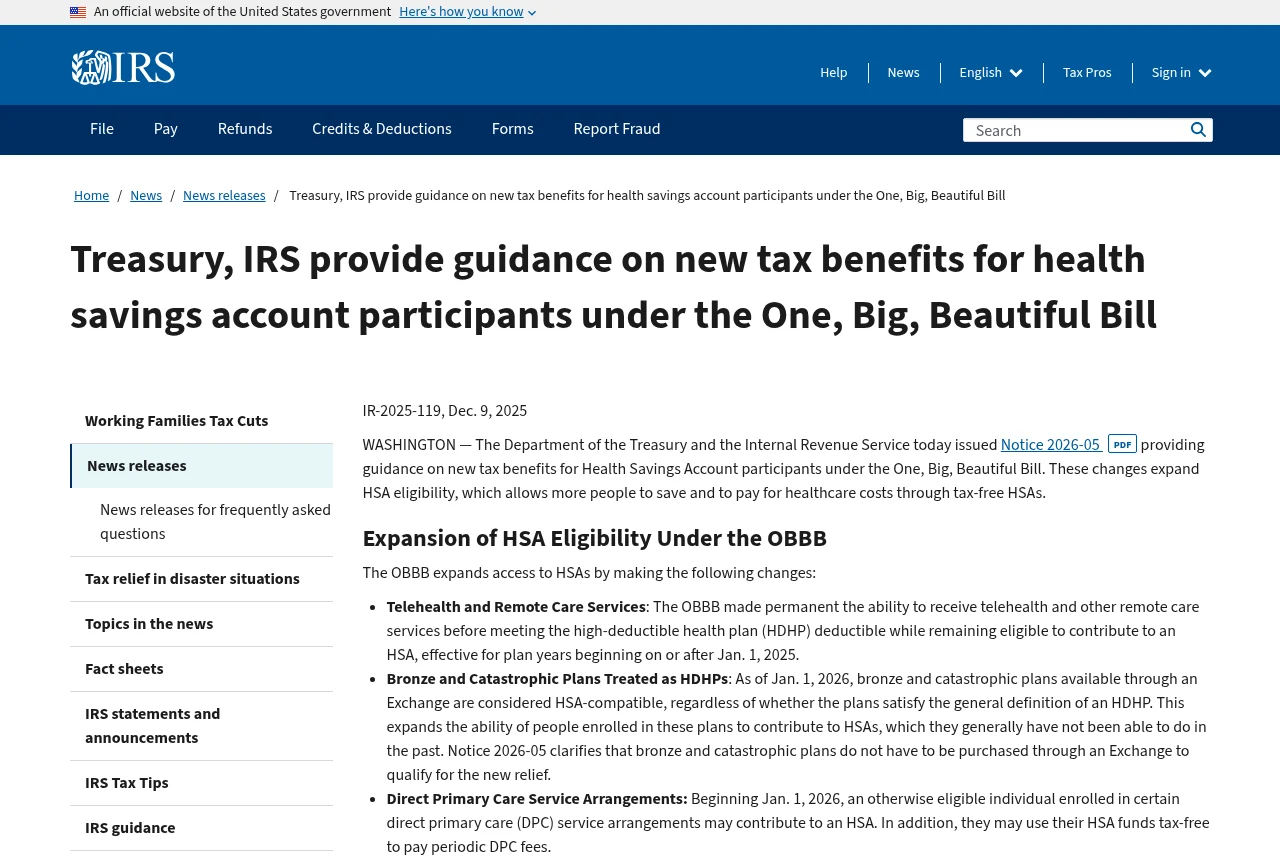
For years the advice was simple: if you wanted a Health Savings Account, you needed a plan that hit specific deductible and out-of-pocket numbers, and most marketplace plans did not qualify. That changed on January 1, 2026. Bronze and catastrophic plans sold as individual coverage on an Exchange are now treated as HSA-qualified coverage regardless of whether they meet those old deductible tests.
This matters more than it would have a year ago. With the enhanced premium subsidies gone, a lot of people have been pushed toward the cheapest bronze plan on the shelf — and that plan now carries a tax break it never had before. The catch is that nothing about it is automatic. No one enrolls you in an HSA, and one very ordinary piece of coverage sitting in your household can make you ineligible to put a dollar in.
Checkpoints
- Bronze and catastrophic plans became HSA-qualified for months beginning after December 31, 2025 — the rule is the plan’s metal level, not its deductible.
- Silver and gold are not banned. They simply get no automatic pass, and still have to clear the old deductible and out-of-pocket tests.
- Enrolling in the plan does not open an HSA. You open it yourself, at any bank or credit union — it does not have to be your insurer’s.
- A general-purpose health FSA — including your spouse’s — disqualifies you from contributing, even though your plan qualifies.
1 Confirm your plan actually qualifies — the test is stricter than “I bought a bronze plan”
Start with the metal level, printed on your Summary of Benefits and Coverage and shown in your plan details when you log in to HealthCare.gov or your state marketplace. Bronze and catastrophic get the automatic treatment. Silver, gold and platinum do not — but they are not excluded either, they just have to meet the deductible and out-of-pocket thresholds the way they always did.
The statutory wording is about availability, not where you bought it. The plan has to be available as individual coverage through an Exchange. So an off-Exchange purchase still counts, as long as the same plan is offered on an Exchange. Two things do not count: plans sold through SHOP, the small-business marketplace, because that is not individual coverage; and an off-Exchange-only plan with no Exchange twin. If you bought direct from an insurer or through a broker, ask the issuer in writing which it is.
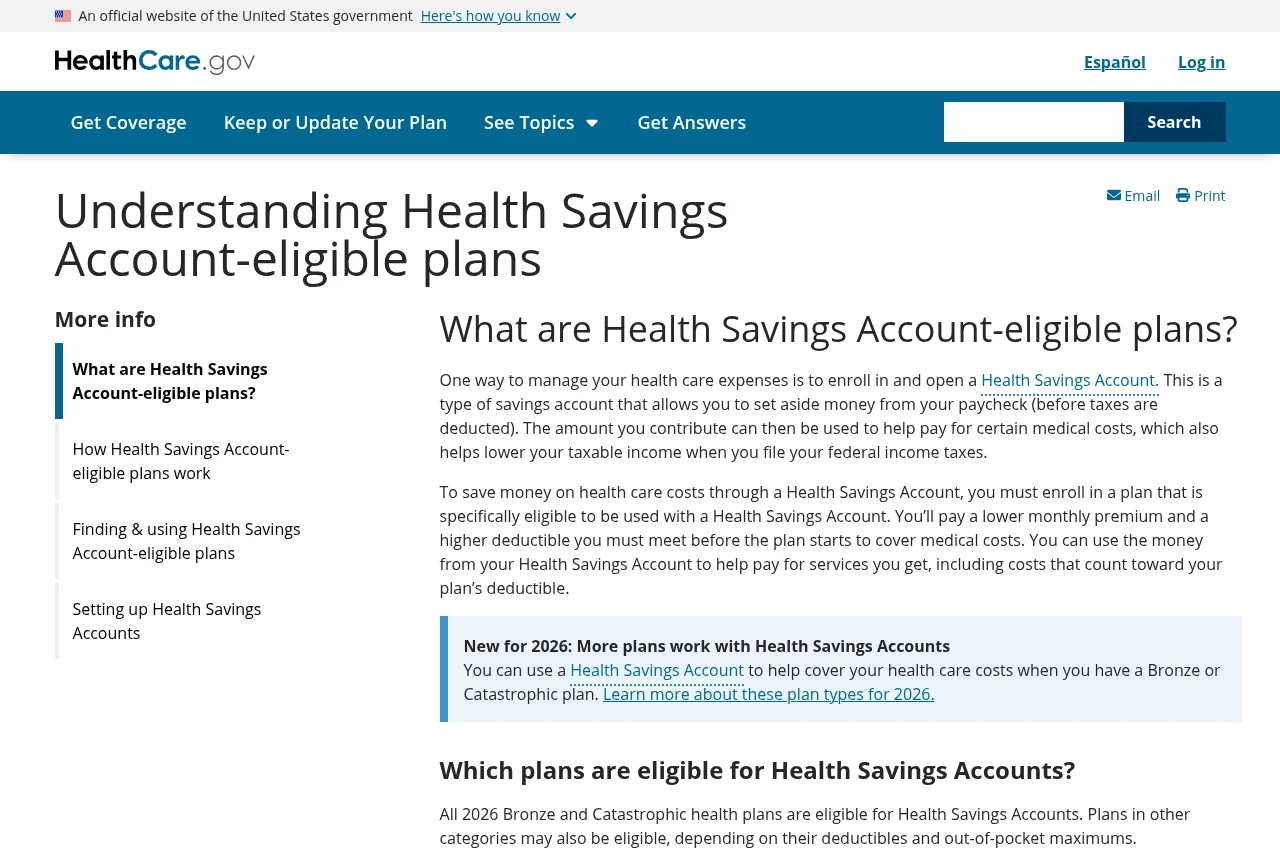
The simplest confirmation a consumer can get is the marketplace’s own flag. In the HealthCare.gov shopping tool, open Add filters and turn on Eligible for an HSA. That is the marketplace telling you what it thinks, in writing, before you enroll.
| Plan type | HSA-qualified? | Premium tax credit? |
|---|---|---|
| Bronze (on or off Exchange, if Exchange-available) | Yes, automatically | Yes |
| Catastrophic | Yes, automatically | No — never |
| Silver / gold / platinum | Only if it meets the IRS deductible and out-of-pocket tests | Yes |
| Bronze bought through SHOP | No — not individual coverage | N/A |
2 Run the four disqualifying-coverage tests before you contribute a dollar
A qualifying plan is only half of it. Eligibility is measured month by month, and for each month you must be covered by the qualifying plan on the first day of that month, have no other disqualifying health coverage, not be enrolled in Medicare, and not be someone else’s tax dependent.
The one that catches people is the second test. A general-purpose health FSA disqualifies you — and so does your spouse’s, because it can reimburse your expenses. Limited-purpose FSAs and HRAs restricted to dental and vision are fine, as are post-deductible and suspended arrangements. An FSA grace period also disqualifies you unless the balance was zero at plan-year end.
Two details worth knowing because they cut the other way. The Medicare test is about enrollment, not eligibility — turning 65 does not end your HSA eligibility, enrolling in any part of Medicare does. And the dependent test uses the word “entitled”: if another taxpayer could claim you, you are out even if they choose not to.
| Test | You are fine if… | You are disqualified if… |
|---|---|---|
| Qualifying plan | Covered on the 1st of the month | Coverage started mid-month (that month does not count) |
| Other coverage | Limited-purpose or post-deductible FSA/HRA | General-purpose health FSA — yours or your spouse’s |
| Medicare | Age 65+ but not enrolled | Enrolled in any part of Medicare |
| Dependent status | No one can claim you | Another taxpayer is entitled to claim you |
3 Open the account yourself, then decide how much this year actually allows
Nobody opens an HSA for you, and no IRS permission is needed. Any bank, credit union, insurer or approved IRA trustee will do, and it does not have to be affiliated with your health plan. Compare the boring things — monthly maintenance fees, closing fees, whether there is a debit card. If you are married and both eligible, you each need your own account; joint HSAs do not exist.
Now the amount. Because eligibility is monthly, the default is to prorate: count the months you were eligible on the first, and contribute that share of the annual limit. Someone 55 or older adds a flat catch-up amount set in statute, which is one of the few figures here that does not move with inflation.
There is a shortcut, and a trap inside it. Under the last-month rule, if you are eligible on December 1 you may contribute the full annual limit for that year — useful if you switched to a bronze plan mid-year. But taking it starts a testing period that runs through December 31 of the following year. Break your eligibility during that stretch, for any reason other than death or disability, and the extra becomes taxable income plus a 10% additional tax. If you are not confident you will hold qualifying coverage that long, prorate instead. Either way you have until the ordinary filing deadline in April to fund the account, and you report it all on Form 8889.
4 Common mistakes, and how to avoid them
Mistake 1
Reading “bronze and catastrophic qualify” as “silver and gold cannot.” They can — they just have to meet the deductible and out-of-pocket tests on their own, the way every plan used to.
Mistake 2
Assuming a catastrophic plan comes with a premium tax credit. It does not, and never has. Bronze gives you the subsidy and the HSA; catastrophic gives you the HSA while you pay full freight.
Mistake 3
Treating enrollment as the finish line — then contributing the full annual limit after a mid-year switch. That is the most common way people create an excess contribution, or trip the last-month rule’s testing period and owe tax plus a penalty.
Do this today
Log in to your marketplace, check whether your plan is bronze or catastrophic, and look for the “Eligible for an HSA” flag. If it is there and no one in your household has a general-purpose health FSA, open an account before you shop again — the window for 2027 coverage is shorter than the one you remember, and there is no mid-January catch-up anymore.
FAQ Frequently asked questions
I’m in my forties. Aren’t catastrophic plans only for people under 30?
There are two doors. The age route is limited to people who have not turned 30 before the plan year starts. But you can also qualify at any age through a hardship exemption if your projected household income leaves you ineligible for premium tax credits or cost-sharing reductions. On HealthCare.gov that is assessed automatically from the income you enter in the normal application.
I bought my plan directly from the insurer, not on the marketplace. Does it still count?
Yes, if the same plan is available as individual coverage on an Exchange — the rule turns on availability, not on where you clicked buy. A plan sold only off-Exchange with no Exchange counterpart does not qualify. Ask your issuer in writing; if you enrolled in good faith with no reason to think otherwise, the IRS has said it will treat you as eligible.
Can I pay my premiums out of the HSA?
Generally no — health insurance premiums are not a qualified HSA expense, with narrow exceptions. Contributions have to go in as cash, but anyone can make them on your behalf, and you deduct them whether or not you itemize.
Key takeaways
- Bronze and catastrophic Exchange-available plans have counted as HSA-qualified coverage since January 1, 2026 — the deductible no longer decides it.
- Silver and gold are not excluded; they simply have to meet the old deductible and out-of-pocket tests on their own.
- Enrolling does not open an HSA, and a general-purpose health FSA in the household — including your spouse’s — blocks contributions.
- Contribution limits and thresholds reset every year, so check the current figures on the official page before you fund the account.